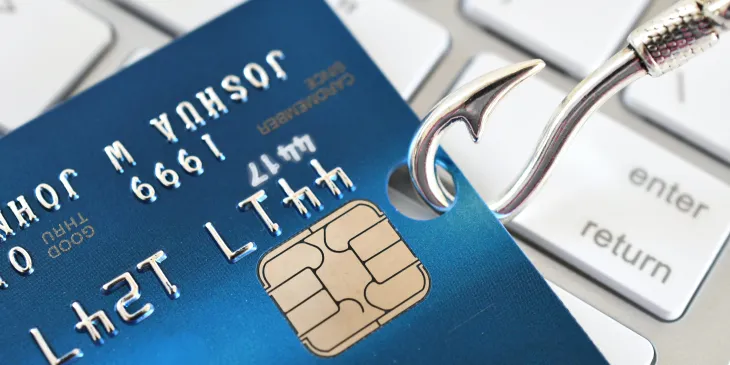
Snap Out Of It: 5 Red Flags That Could Signal a Scam
Fraudsters often impersonate banks, government agencies, familiar businesses or even people you know. Their messages may look legitimate, sound urgent and include just enough personal information to gain your trust.
Even when a call, email or text appears convincing, the request behind it may reveal the scam. When something feels off, pause before responding. These five red flags can help you recognize common fraudulent tactics and protect your personal and financial information.
1. They ask you to open a link
Unexpected links are commonly used to send people to fraudulent websites designed to look like legitimate login pages. Once there, scammers may attempt to collect your username, password, debit card information or other sensitive details. That’s a red flag.
Avoid clicking links in unexpected emails or text messages. Instead, visit the company’s official website by typing the address into your browser or use its trusted mobile app.
2. They ask you to keep it a secret
Scammers may tell you not to contact your bank, family members or law enforcement. They may claim that sharing information could interfere with an investigation, delay a refund or put your account at greater risk. That’s a red flag.
This tactic is meant to isolate you and prevent someone else from recognizing the scam. A legitimate organization will not pressure you to keep a suspicious financial request secret.
3. They send an unexpected attachment
Attachments can contain malicious software or direct you to a fraudulent form. Even if the message appears to come from someone you know, the sender’s account may have been compromised. That’s a red flag.
Do not open an unexpected attachment until you have independently confirmed that it is legitimate. Contact the sender using a trusted phone number or a separate communication method.
4. They request sensitive personal information
Be cautious when an unexpected caller, email or text asks for sensitive information such as:
- Online banking passwords
- Debit card PINs
- One-time security codes
- Full Social Security numbers
- Account or card information
That’s a red flag. Extraco will not unexpectedly contact you and ask for confidential login credentials, PINs or security codes. There may be times when identifying information is needed after you initiate an application or contact Extraco through an official channel. The important difference is who initiated the conversation and how the request was made.
5. They pressure you to log in or send money
Scammers create urgency because they do not want you to stop and think. They may claim that your account has been compromised, a payment is overdue or you must act immediately to prevent a loss. That’s a red flag.
They may also request payment through a person-to-person payment app, wire transfer, gift card or cryptocurrency. Once the money is sent, it may be difficult or impossible to recover. Do not send money or approve a transaction based only on an unexpected message or call.
Stop, slow down and verify
Scams can feel real. That is the trick. Before taking action:
- Stop communicating with the sender or caller.
- Do not click links, open attachments or share information.
- Contact Extraco directly at 1.866.EXTRACO or our other verified methods that can be found on our Contact Us page.
- Review your accounts for unfamiliar activity.
- Report suspicious communications so they can be investigated.
Remember, caller ID, email addresses and text message names can be manipulated. A familiar name or local phone number does not guarantee that the communication is legitimate. When in doubt, hang up and call us back to confirm what is being asked.
Protect yourself with trusted fraud-prevention resources
Go to the bottom of this page for fraud-prevention tools and visit the Extraco Safety Center for the security guidance and steps you can take if you believe your information has been compromised.
You can also explore Banks Never Ask That for quizzes, videos and examples designed to help you recognize common scams.
When in doubt, stop and contact Extraco directly.